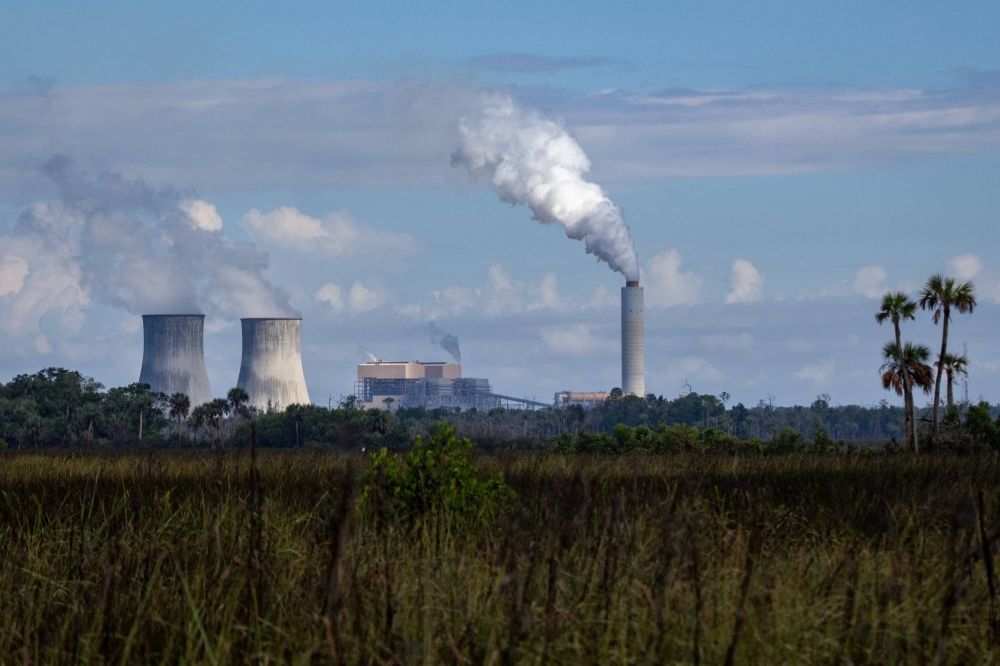
What is happening at the Zaporizhzhia nuclear power station in Ukraine during the Russian invasion is simply increasingly the suspense of waiting for a horrible nuclear “accident” that could threaten the lives of much of Ukraine and large areas of Europe. That is one issue that has been ongoing for more than two years and continues to grow more carelessly dangerous as time goes by until now it is at the critical issue point of no return. It is like Nero fiddling while Rome burns, but much, much, worse.
But the Russia/Ukraine war, with the USA and now NATO apparently supporting Ukraine, increasing the threats from Russia’s Putin and others, makes Ukraine a hotbed for the beginning of WWIII, and, if that happens, Armageddon happens. The leaders of nuclear armed nations all know this, but does their seemingly lack of apparent care mean if they cannot have it all, they will take the rest of humanity and other life with them to their final destinations?
This lying world, reeking of the stench of humanity’s hatred for one-another, filling every day to the putrid hilt of wishful but hopeless ‘deterrence’ of nuclear threats that they and we know cannot continue forever, so the answer to my question has two current answers only: 1) unite and remove ‘all things nuclear’ from the Earth’s environment forever, or 2) remain divided and use nuclear weapons, including nuclear power plants, to quickly create the 6th Extinction. ~llaw
IAEA urges halt to attacks on town near Ukrainian nuclear plant
Reuters
Sun 23 June 2024 at 3:47 pm GMT-7·2-min read
IAEA urges halt to attacks on town near Ukrainian nuclear plant
(Reuters) – The U.N.’s nuclear watchdog called on Sunday for a halt to attacks on Enerhodar, a town near the Russian-occupied Zaporizhzhia nuclear power station after drone strikes this week hit two electricity substations serving the area.
The plant’s Russian-installed officials accused Ukraine of staging two drone strikes that destroyed one substation, damaged another and cut power to residents for a time.
Rafael Grossi, director general of the International Atomic Energy Agency, made no reference to Ukraine and said the incidents had no affect on the Zaporizhzhia plant’s operations.
But he said the attacks had to stop.
“Whoever is behind this, it must stop. Drone usage against the plant and its vicinity is becoming increasingly more frequent,” Grossi said in a statement on the IAEA website.
“This is completely unacceptable and it runs counter to the safety pillars and concrete principles which have been accepted unanimously.”
Power had been cut to Enerhodar, a few kilometres from the plant, for 16 hours, he said. But neither of the attacks, which occurred on Wednesday and Friday, had any impact on the power lines that the nuclear plant uses to keep operating.
The Zaporizhzhia plant’s Russia-installed management said some “infrastructure facilities” including the transport department and print shop experienced disruptions, but that nuclear safety measures remained fully operational.
Ukrainian officials have made no comment on the incidents and Reuters could not independently confirm the reports.
Russian Foreign Ministry spokeswoman Maria Zakharova said the attacks exposed Ukraine’s disregard for nuclear safety.
Russian troops seized the Zaporizhzhia plant in the early days of the February 2022 invasion, and Moscow and Kyiv have since regularly accused each other of endangering safety around the facility. It produces no electricity at the moment.
The IAEA maintains inspectors at the station.
Russia launched mass attacks on Ukrainian energy infrastructure in the first winter of the conflict and resumed a long series of attacks in March. Kyiv says the renewed attacks have knocked out half of its energy-generating capacity.
(Reporting by Ron Popeski; Editing by Bill Berkrot)
Subscribed
ABOUT THE FOLLOWING ACCESS TO “LLAW’S ALL THINGS NUCLEAR” RELATED MEDIA:
There are 6 categories, including a bonus non-nuclear category for news about the Yellowstone caldera and other volcanic and caldera activity around the world that play an important role in humanity’s lives, as do ‘all things nuclear’ for you to pick from, usually with up to 3 links in each category about the most important media stories in each category, but sometimes fewer and occasionally even none (especially so with the Yellowstone Caldera). The Categories are listed below in their usual order:
All Things Nuclear
Nuclear Power
Nuclear Power Emergencies
Nuclear War
Nuclear War Threats
Yellowstone Caldera (Note: There one Yellowstone Caldera bonus story available in this evening’s Post.)
Whenever there is an underlined link to a Category media news story, if you press or click on the link provided, you no longer have to cut and paste to your web browser, since this Post’s link will take you directly to the article in your browser.
A current Digest of major nuclear media headlines with automated links is listed below by nuclear Category (in the above listed order). If a Category heading does not appear in the daily news Digest, it means there was no news reported from this Category today. Generally, the three best articles in each Category from around the nuclear world(s) are Posted. Occasionally, if a Post is important enough, it may be listed in multiple Categories.
IAEA Board holds emergency meeting on Zaporizhzhia attacks. 1 / 2. IAEA … But neither of the attacks, which occurred on Wednesday and Friday, had any …
Russia Can Reduce Decision-Making Time For Using Nuclear Weapons If Threats Increase, Lawmaker Says ; Moscow: Russia ; The war in Ukraine has triggered …
A must read far beyond fantasy! I am just finishing up my 2nd full reading (with mindful notes) of Annie Jacobsen’s, perhaps prophetic, book “Nuclear War: A Scenario” of a well-put-together extremely logical nuclear war from years of interviews and working within governmental documents and knowledgeable individuals who have or had a reason to know what they are or were (some have passed away) talking about when it comes to the next war. It will be WWIII and it will be nuclear, and it won’t take very long.
Her book demonstrates and proves without doubt that we humans absolutely fail to understand the earth-shaking news (or the reality) of a nuclear war ending virtually all life on planet Earth within a very short period of time if some leader in some country pushes the 1st nuclear war button. As an informed species we humans are entirely in the dark, unaware of the immanent danger of both nuclear arms and nuclear power plants, and most articles we read from the mass-media editors and writers have no idea that nuclear war today will be like no other war in the history of the world — potentially as dangerous and far more explicitly sudden, asteroid collision over 65 million years ago, as the last (5th) Earth Extinction that wiped out the dinosaurs and other life on Earth before mankind showed up and eventually discovered uranium. We, mankind, are about to cause the 6th Extinction if just one nuclear armed country fires on another with an ICBM carrying a single multi-kiloton nuclear bomb.
We read ridiculously childish uninformed articles every day from the media about how we have reduced the number of nuclear weapons since the Cuban Missile Crisis in 1962, for instance, implying that the world is a safer place now than then, but the article editor or author has no idea that the ‘number’ of nuclear weapons has nothing at all to do with the ‘power’ of nuclear weapons between then and now. And that story, among daily dozens of others with long outdated knowledge and perceptions, is like listening to a ‘goodnight, sweet dreams’ story from a parent when we were small children compared to the reality of it all in our day-to-day nuclear-based waking hours now. Armageddon is a forgone conclusion unless we do an immediate about face and get rid of ‘all things nuclear’ forever with no exceptions, or even more doubtfully, some unknown but intelligent ‘life-force’ comes along and does it for us. ~llaw (Read on . . .)
How often do you think about all the ways the world could end?
As the host of The Gray Area, I find myself engaged in this macabre exercise more than most. We’ve done episodes on runaway AI and climate change and extinction panics. One of the few topics we haven’t covered, however, is nuclear war. Which is surprising because this scenario is near the top of basically every list of existential threats — and now feels newly salient with recent news involving North Korea, Iran, and China.
Annie Jacobsen is a reporter and the author of a new book called Nuclear War: A Scenario. I read a lot of books for the show and this one stuck with me longer than any I can recall. It’s a book that clearly wants to startle the reader, and it succeeds.
Jacobsen walks you through all the ways a nuclear catastrophe might unfold, and she gives a play-by-play breakdown of the terrifying choreography that would ensue in the minutes immediately after a nuclear missile launch.
So I invited Jacobsen on The Gray Area to talk about what a nuclear exchange would really look like and how perilously close we are to that reality. As always, there’s much more in the full podcast, so listen and follow The Gray Area on Apple Podcasts, Spotify, Pandora, or wherever you find podcasts. New episodes drop every Monday.
This conversation has been edited for length and clarity.
Sean Illing
I suspect the image most of us still have of nuclear bombs is the image of Hiroshima and Nagasaki, but that was a long time ago. How much more powerful are the thermonuclear weapons we’re talking about today?
Annie Jacobsen
To give you an idea of a thermonuclear weapon, I went to one of the ultimate sources, a 93-year-old nuclear weapons engineer named Richard Garwin, probably the most famous nuclear weapons engineer, physicist, presidential adviser, still alive. Garwin drew the plans for the very first thermonuclear weapon. Its code name was Ivy Mike; it’s on the cover of my book. It was 10.4 megatons.
AD
So consider that the Hiroshima bomb that you referenced was 15 kilotons and then think about 10.4 megatons. It’s about 1,000 Hiroshima-sized bombs detonating at the same time from the same center point. Garwin explained it to me in the simplest of terms when he asked me to visualize this fact: A thermonuclear weapon uses an atomic bomb as its fuse inside of the weapon. That’s how powerful it is.
Sean Illing
Paint the picture for me, as you do in the opening pages of the book, where you imagine a nuke is dropped on Washington, DC. What happens next?
Annie Jacobsen
So with a 1-megaton bomb on Washington, DC, what happens in the very first millisecond is that this thermonuclear flash expands into a ball of fire that is one mile of pure fire. It’s 19 football fields of fire.
Then the fireball’s edges compress into what is called a steeply fronted blast wave — as dense wall of air pushing out, mowing down everything in its path three miles out, in every direction, because it is accompanied by several-hundred-mile-an-hour winds.
It’s like Washington, DC, just got hit by an asteroid and the accompanying wave. When you think about this initial 9-mile diameter ring, imagine every single engineered structure — buildings, bridges, etc. — collapsing.
There’s also a thermonuclear flash that sets everything on fire and melts lead, steel, and titanium. Streets nine miles out transform into molten asphalt lava. The details are so horrific; it’s important to keep in mind these are not from my imagination. These are sourced from Defense Department documents because the Atomic Energy Commission and the Defense Department have been keeping track of what nuclear bombs do to people and to things ever since the Hiroshima and Nagasaki bombings of 1945.
Sean Illing
When all that happens, we’re in what you call “Day Zero,” and then the nuclear winter begins. What does that look like?
Annie Jacobsen
One of the big premises of the book was to take readers from nuclear launch to nuclear winter and the nuclear launch up to Day Zero takes place over this horrifying 72-minute period. As STRATCOM Commander General [C. Robert] Kehler said to me in an interview when we were talking about a nuclear exchange between Russia and the United States: “Yes, Annie, the world could end in the next couple of hours.”
AD
So nuclear winter begins in essence after the bombs stop falling and there is a process of mega-fires. The area around every nuclear detonation is going to ultimately result in what is known now as a mega-fire. You’re talking about 100 to 300 square miles of fire per bomb where everything in that area is burning until it doesn’t exist anymore. This is because, of course, there are no first responders anymore. There are no fire trucks, there’s no way to put anything out.
With all of these explosions, 330 billion pounds of soot gets lofted into the troposphere. That is enough soot to block out 70 percent of the sun, creating a dramatic temperature plunge up to 40 degrees Fahrenheit, certainly in the mid-latitudes.
Those areas, for example, from Iowa to Ukraine, that whole band of the mid-latitudes, the bodies of water in those areas become frozen over in sheets of ice. With that temperature drop, you have the death of agriculture and that is why nuclear winter after nuclear war will result in what is now estimated to be 5 billion dead.
Sean Illing
And if I remember correctly, those models also estimated that in places like Iowa and Ukraine temperatures basically wouldn’t go above freezing for something like six years at least. Is that right?
Annie Jacobsen
That’s right.
I was reading Carl Sagan, who was one of the original five authors of the nuclear winter theory, who wrote about how after these bodies of water that get frozen over for years, after they thaw out and expose all the dead people, you then have to deal with the pathogens and the plague. Nikita Khrushchev, the Soviet premier during the Kennedy administration, once said to Kennedy when the two of them talked about this, that “after a nuclear war, the survivors would envy the dead.”
Sean Illing
After all the reporting you did, are you confident that there are enough checks and guardrails in place to ensure that we’ll avoid a nuclear exchange if it’s at all possible?
Annie Jacobsen
Let me answer that question with a quote from the current secretary-general of the United Nations, António Guterres, who said, “The world is one misunderstanding, one miscalculation away, from nuclear annihilation.”
Sean Illing
What does that really mean?
Annie Jacobsen
What it means is exactly what he said: that we could just have a mishap. We could have a mishap caused by a misinterpretation. A miscalculation would be one nuclear-armed nation thinking another nuclear-armed nation was doing something that maybe it wasn’t doing.
AD
This gets us into some of the crazy policies that exist on the books, things like “launch on warning” whereby once the United States learns that it is being attacked by an ICBM or a sub-launched ballistic missile, the president then has six minutes to decide how he should respond, with nuclear weapons. That’s what Guterres is talking about when he talks about a miscalculation.
Sean Illing
How much room is there for human agency in these command and control protocols? You always hear people say in presidential elections, “Do we really trust that guy with the nukes?” But is that the right way to think about this?
Annie Jacobsen
You’re raising an existential question that everyone should be raising.
We’ve been living in what some call a 79-year experiment. Yes, you could say, “Deterrence has held all these years.” Never mind the fact that there used to be two nuclear-armed nations, and there are now nine; never mind the fact that you have new technology factors coming into the mix.
Never mind the fact that nuclear saber-rattling has suddenly become acceptable among world leaders. This is astonishing. If you look at history, this was never part of the rhetoric, particularly out of the mouth of a US president, as happened with the former President Trump.
When I began reporting this book, the fundamental question that I was trying to answer was not, “Is deterrence great?” but rather what if deterrence fails? The Defense Department predicates its nuclear arsenal on this idea that deterrence will hold. That is the fundamental assumption. It’s written everywhere. “Deterrence will hold.”
Well, I also found a discussion with the deputy general of STRATCOM talking to his colleagues, not in a classified setting but in a somewhat rarified setting. What he said was this: “If deterrence fails, it all unravels.”
Sean Illing
I think it was former CIA Director Michael Hayden who told you explicitly that this process is designed for speed and decisiveness. It is not designed to debate the decision. On some level, I get that. But the automaticity of the whole process, given the stakes, is more than a little terrifying.
Annie Jacobsen
You better believe it is. And Hayden actually told that to members of Congress. And by the way, I believe that with the rhetoric from the former president, Donald Trump, all that talk about “fire and fury” with North Korea, it worried Congress to such a degree that they issued a number of reports that drilled down on a couple concepts that the public was not clear on.
AD
One of them had to do with what’s called sole presidential authority. So when Trump was saying, “I have a bigger button,” and that kind of rhetoric, Congress released a couple reports making clear that the president of the United States does have sole presidential authority. That means he needs to ask permission of no one to launch a nuclear war — not the secretary of defense, not the chairman of the Joint Chiefs of Staff, and not Congress.
Sean Illing
You write something near the end of the book imagining that the secretary of defense, who’s the acting president in this hypothetical situation, what if this person has a crisis of conscience and wonders, “Is there really any point in firing these bombs and wiping out the other half of humanity?”
And it’s pretty clear that there really isn’t any room for that because the whole logic of deterrence is predicated on the absolute promise that the process is fixed and automatic. That’s what makes it a deterrent. But then again, it imprisons the actors in this process so that they don’t really have any control over it.
Annie Jacobsen
Let me add something because Dr. Glen McDuff of the Los Alamos Laboratory, who is both a nuclear weapons engineer who worked on the Star Wars program during the Reagan administration and has served as the historian at the classified library at the lab. I asked him, “Do you think anyone would defy orders?” And he said, “Annie, you have a better chance at winning Powerball.”
Sean Illing
Is there some near-future where in order to further reinforce the automaticity of this process, we just have AI controlling the whole thing from start to finish?
Annie Jacobsen
I can’t imagine a worse nightmare scenario than bringing AI, or more machine-learning technology, into the mix. There’s an incredible amount of machine learning that is built into the system. For example, the satellite detects the launch and then that data is processed in space. About one-tenth of the way to the moon is where a geosync satellite sits and that data is processed and streamed down to the nuclear command and control bunkers in the United States. This is happening in seconds. But to the idea of putting an “AI” into the mix on the human decision-making level or identifying level, that seems like a recipe for disaster and is a reason why so many of the systems within the triad are still analog, not digital. In other words, they continue to be similar systems to when they were invented decades ago so that they can’t be hacked.
Here at Vox, we believe in helping everyone understand our complicated world, so that we can all help to shape it. Our mission is to create clear, accessible journalism to empower understanding and action.
If you share our vision, please consider supporting our work by becoming a Vox Member. Your support ensures Vox a stable, independent source of funding to underpin our journalism. If you are not ready to become a Member, even small contributions are meaningful in supporting a sustainable model for journalism.
Thank you for being part of our community.
Swati Sharma
Vox Editor-in-Chief
Subscribed
ABOUT THE FOLLOWING ACCESS TO “LLAW’S ALL THINGS NUCLEAR” RELATED MEDIA:
There are 6 categories, including a bonus non-nuclear category for news about the Yellowstone caldera and other volcanic and caldera activity around the world that play an important role in humanity’s lives, as do ‘all things nuclear’ for you to pick from, usually with up to 3 links in each category about the most important media stories in each category, but sometimes fewer and occasionally even none (especially so with the Yellowstone Caldera). The Categories are listed below in their usual order:
All Things Nuclear
Nuclear Power
Nuclear Power Emergencies
Nuclear War
Nuclear War Threats
Yellowstone Caldera (Note: There no Yellowstone Caldera bonus stories available in this evening’s Post.)
Whenever there is an underlined link to a Category media news story, if you press or click on the link provided, you no longer have to cut and paste to your web browser, since this Post’s link will take you directly to the article in your browser.
A current Digest of major nuclear media headlines with automated links is listed below by nuclear Category (in the above listed order). If a Category heading does not appear in the daily news Digest, it means there was no news reported from this Category today. Generally, the three best articles in each Category from around the nuclear world(s) are Posted. Occasionally, if a Post is important enough, it may be listed in multiple Categories.
After comparing all the scenarios, the same report says there is “no role for nuclear energy unless costs are constrained and renewable energy growth …
The Coalition is unable to say how much nuclear energy it plans to generate, its energy spokesperson says. The amount of power is one of many details …
… energy supply, China is already a global leader in nuclear power generation. … Hong Kong holds mass drill to prepare for crowds, emergencies at Kai …
With that temperature drop, you have the death of agriculture and that is why nuclear winter after nuclear war will result in what is now estimated to …
Vladimir Putin has stepped up the rhetoric over nuclear warfare and doubled down on threats to the West in recent months – at the same time as Russian …
As civilians who have slim to no access to valuable information needed to conduct our lives, including our elected bureaucrats and ‘experts’ on nuclear war who are constantly making recommendations or even lawful decisions based on little more than hot air, e.g. approving an increase in financial support of nuclear power plants (new ones, those in use, and even those shut down and rising from the dead), and arbitrarily loosening NRC safety rules and regulations for allowing new on-line plants in the future, all for meeting the impossible-to-achieve 2050 deadline to reach ‘net zero’ carbon when a majority of politicians don’t even understand what the meaning of ‘net zero CO2’ is.
Only two bureaucrats, thank you both, voted against the nuclear plan — so how do we have any idea from the constant official ‘yes’/’no’ responses we see daily in the media, both concerning nuclear power and nuclear war, are worth considering? Following are examples of articles (one relating to nuclear power; the other relating to nuclear war) that can easily be described as meaningless (for totally different reasons) because we don’t know and won’t admit that we don’t know what we think we know, so we blindly move forward for no logical reason, or we simply say, “but on the other hand”, when we can’t have it both ways. . . ~llaw
88-2: Only Markey, Sanders Oppose ‘Expensive, Risky’ Nuclear Power Expansion
Calling the vote “disappointing,” one campaigner warned: “Nuclear is, at best, a waste of resources. At worst, it’s a meltdown.”
Just U.S. Sens. Ed Markey and Bernie Sanders on Tuesday voted against legislation that one scientist warned this week “will only increase the danger to people already living downwind” of nuclear power facilities.
Speaking on the upper chamber’s floor Tuesday, Markey (D-Mass.)—who chairs the Senate Environment and Public Works Subcommittee on Clean Air, Climate, and Nuclear Safety—stressed his support for the United States Fire Administration and firefighter assistance grant programs, and those working to keep U.S. communities safe.
“Unfortunately, the vote today is not just for the lifesaving programs that I am staunchly on record as supporting,” he explained. “On the coattails of this noncontroversial bill to protect our heroes, our colleagues in the House tacked on a dangerous additional 90-page package of provisions that merged the Senate’s ADVANCE Act and the House’s Atomic Energy Advancement Act.”
The legislation—now on its way to President Joe Biden’s desk—puts “corporate profits over community cleanup,” the senator said. “Notably, the provisions from the Senate bill that would have provided a much-needed $225 million for communities affected by nuclear closures and $100 million to clean up contaminated tribal communities are not in the legislation anymore, as it came back from the House of Representatives—but the provisions to prop up the nuclear industry, they remain.”
Highlighting that the bill would, among other things, require the Nuclear Regulatory Commission to rewrite its mission statement to say that its regulation and oversight should “not unnecessarily limit… civilian use of radioactive materials and deployment of nuclear energy,” Markey declared that the NRC “shouldn’t be the Nuclear Retail Commission.”
“We have a duty to set the strongest possible standards for domestic and international nuclear activities, as an example to the rest of the world,” he said of the United States. “We also have to clean up our existing messes, particularly in tribal and environmental justice communities, before investing in anything that might make those messes worse. As a result, despite my strong and continued support for the fire safety grants and my respect for my colleagues working on this issue, I must vote no.”
“It’s disappointing that the Senate chose to promote nuclear power when America is flush with energy options that are better for people and the planet.”
Praising Markey and Sanders (I-Vt.), Beyond Nuclear on Wednesday urged the bill’s critics to call their offices “to thank them for their courageous, wise, and good NO votes, despite it all,” adding that “they spoke truth to power, and have kept some glimmer of hope alive, despite this very dark moment in the cause of anti-nuclear, environmental, and environmental justice activism.”
The Senate’s approval of the legislation was celebrated by the nuclear industry and its advocates. Environment America noted that in addition to the NRC mission statement rewrite, the bill “promotes nuclear power, including small modular reactors (SMRs) and highly concentrated nuclear fuel, and the export of nuclear materials and technology.”
Johanna Neumann, senior director of the group’s Campaign for 100% Renewable Energy, said after the vote, “It’s disappointing that the Senate chose to promote nuclear power when America is flush with energy options that are better for people and the planet.”
“Nuclear is, at best, a waste of resources. At worst, it’s a meltdown,” she continued. “Why are we choosing to split atoms when it’s cheaper, faster, and better for the environment to cut energy waste and power our lives with wind and solar?”
“Government officials should embrace energy efficiency and renewables as the best solutions to America’s challenges,” she added.
Isaac Bowers, federal legislative director of Public Interest Research Group, similarly said that “American consumers have better energy options than nuclear power. It makes no sense to perpetuate this expensive, risky industry when America has an abundance of cleaner, safer, and more affordable renewable energy sources.”
World War III Coming Soon? Putin Makes A New Nuclear War Threat over Ukraine
Russian President Vladimir Putin’s recent nuclear threats against Ukraine and NATO have raised concerns. Despite these threats, a nuclear strike seems unlikely as the war currently favors Russia, with its forces on the rise and Ukraine’s recent counteroffensive faltering.
Summary and Key Points: Russian President Vladimir Putin’s recent nuclear threats against Ukraine and NATO have raised concerns. Despite these threats, a nuclear strike seems unlikely as the war currently favors Russia, with its forces on the rise and Ukraine’s recent counteroffensive faltering.
-However, Putin’s unpredictability and the Kremlin’s historical willingness to take drastic measures make future actions uncertain.
-Should the situation deteriorate for Russia, the risk of nuclear escalation could increase, leaving global leaders wary of Putin’s next move.
Putin’s Nuclear Threats: Is Russia’s Advantage in Ukraine Keeping Them at Bay?
Are you certain Russian President Vladimir Putin won’t use nuclear weapons against Ukraine?
If you ask this question in Washington, D.C., and around the European capitals, you will get contradictory answers.
Putin and Kremlin officials have been making regular nuclear threats against not only Ukraine but also NATO.
The latest such threat came yesterday during a joint press conference with North Korean dictator Kim Jong Un in North Korea.
Nuclear Threats from Putin…Again
Putin implied in recent press statements that he could authorize the Russian military to launch a nuclear strike—most likely tactical—against Ukraine if the war goes against him.
“Putin implicitly threatened to use nuclear weapons if the West enables Ukraine to decisively defeat Russia in order to undermine the international community’s cohering strategic vision of support for Ukraine,” the Institute for the Study of War assessed in a recent update on the war in Ukraine.
Putin’s coded nuclear remarks likely came in response to recent statements by NATO officials about the need for increased nuclear readiness with an eye toward Russia.
The West has braced for a Russian nuclear strike before, and at some point, the CIA was working on contingency plans on how to prevent such an attack. As of now, however, it seems highly unlikely that Putin will order a nuclear strike for a simple reason: his forces are on the rise.
Currently, the war is going in Moscow’s favor. The last large-scale Ukrainian counteroffensive last summer failed to achieve the intended operational breakthrough, despite Kyiv throwing into combat its most elite units equipped with Western weapon systems, such as Leopard 2, Challenger 2, and M1 Abrams main battle tanks and M2 Bradley infantry fighting vehicles.
Not only did the Ukrainian military fail to achieve an operational breakthrough, but the Russian forces also went on the counteroffensive and are now pressuring the Ukrainians along the contact line.
Russia Wins in Ukraine – but at a Massive Cost
To be sure, the Russian forces are taking devasting casualties. In May alone, Moscow lost close to 40,000 men, or more than 1,000 a day, killed, wounded, or captured. Overall, the Ukrainian Ministry of Defense assesses—and is largely corroborated by Western intelligence services—that Moscow has lost more than 530,000 men in the fighting so far. Casualties in heavy weapon systems are also high, with the Russian military losing every day more than 100 main battle tanks, artillery pieces, infantry fighting vehicles and armored personnel carriers, and unmanned aerial systems.
However, Russia has shown a remarkable force generation capability. Despite losing more than twice the initial invasion force, the Russian military has as many as 500,000 men in Ukraine. Their quality isn’t the best, but they make do for the Kremlin’s purposes.
So, right now, the Kremlin doesn’t have a reason to launch a nuclear weapon against Ukraine. However, if the situation on the ground changes, then that is another issue, and no one can accurately predict what a dictator like Putin can do.
About the Author: Biography and Military Expertise
Stavros Atlamazoglou is a seasoned defense journalist specializing inspecial operations and a Hellenic Army veteran (national service with the 575th Marine Battalion and Army HQ). He holds a BA from the Johns Hopkins University and an MA from the Johns Hopkins’ School of Advanced International Studies (SAIS). His work has been featured inBusiness Insider,Sandboxx, andSOFREP.
Subscribed
ABOUT THE FOLLOWING ACCESS TO “LLAW’S ALL THINGS NUCLEAR” RELATED MEDIA:
There are 6 categories, including a bonus non-nuclear category for news about the Yellowstone caldera and other volcanic and caldera activity around the world that play an important role in humanity’s lives, as do ‘all things nuclear’ for you to pick from, usually with up to 3 links in each category about the most important media stories in each category, but sometimes fewer and occasionally even none (especially so with the Yellowstone Caldera). The Categories are listed below in their usual order:
All Things Nuclear
Nuclear Power
Nuclear Power Emergencies
Nuclear War
Nuclear War Threats
Yellowstone Caldera (Note: There no Yellowstone Caldera bonus stories available in this evening’s Post.)
Whenever there is an underlined link to a Category media news story, if you press or click on the link provided, you no longer have to cut and paste to your web browser, since this Post’s link will take you directly to the article in your browser.
A current Digest of major nuclear media headlines with automated links is listed below by nuclear Category (in the above listed order). If a Category heading does not appear in the daily news Digest, it means there was no news reported from this Category today. Generally, the three best articles in each Category from around the nuclear world(s) are Posted. Occasionally, if a Post is important enough, it may be listed in multiple Categories.
The ”Accelerating Deployment of Versatile, Advanced Nuclear for Clean Energy Act of 2024,” or ADVANCE Act, aims to speed up permitting and create new …
From the left, clockwise, Joe Biden, Vladimir Putin, Xi Jinping and Kim Jong Un, the leaders of the U.S., Russia, China and North Korea, respectively. A Harvard expert has suggested that we are closer to… More PHOTO ILLUSTRATION BY NEWSWEEK/GETTY IMAGES
For the complete text of Harvard Professor Bunn’s click on the link to the journal “Science” in the third paragraph of the Newsweek article.
My problem with these kinds of stories is that they almost always bring up the issue of elapsing treaties and half-way civilized leaders of the 9 countries that have nuclear weapons of mass destruction. Neither issue is the case so far as relying on avoiding nuclear war is concerned. Pretending that humans are humanitarian and will do the right thing has disappeared forever (if, in fact, it ever existed, which I doubt). We are now faced with nuclear weapons capable of destroying all life on planet Earth hundreds if not thousands of times over with nothing more than the presently existing nuclear weapons. The reduction in quantity since 1962 is meaningless, having been replaced by incredibly more powerful bombs. An entire city and its surrounds, such as Washington, D.C. can be totally destroyed with just one of several thousand nuclear bombs presently in existence and ready to launch.
The only effective avoidance of nuclear war thus far, especially in recent years, has been a thing called ‘deterrence’, which consists of world leaders’ lying, threatening one another with “I am tougher than you” face-to-face threats like grade-school kids on a recess playground confrontation. But ‘deterrence’ cannot continue to be the spoiler of nuclear war because continuing to build more and more bigger, stronger, far more powerful nuclear weapons in order to threaten supposedly weaker nations becomes an impossible defense because such threats are already meaningless fabrications and have grown beyond belief as well as patently unaffordable to continue on in defense of an awaiting nuclear holocaust. As Annie Jacobsen writes in her book “Nuclear War: A Scenario”, “deterrence has failed.” In other words the ‘lying games’ are all over with, and nuclear war is inevitable. ~llaw
Published Jun 20, 2024 at 2:00 PM EDTUpdated Jun 21, 2024 at 7:03 AM EDT
01:03
Putin Warning: World ‘Close To Point Of No Return’
A Harvard professor has warned the world is dangerously close to nuclear war at a time when leading experts key to preventing such conflicts are “aging out,” pleading with leaders to urgently seek help from a new generation of scientists and engineers.
Matthew Bunn, a professor of energy, national security and foreign policy, said “the risk of nuclear war has not been so high since the Cuban Missile Crisis” in 1962.
“Dark clouds loom on the nuclear horizon, with threats from all directions,” he wrote in an editorial for the scientific journal Science, released Thursday. “The world could soon face an unrestrained arms competition for the first time in over five decades—and a more complex one involving more countries and more technologies.”
In his editorial, Bunn warned the 2010 New START Treaty is the last remaining agreement limiting U.S. and Russian nuclear forces, but it expires in 2026, with Russia blocking required inspections and no new talks underway.
He pointed to a global landscape that is marked by heightened nuclear tensions, including: Russia’s nuclear threats in the Ukraine conflict; China’s construction of numerous missile silos; North Korea’s missile testing; ongoing nuclear rivalry between India and Pakistan; and Iran’s nuclear ambitions.
In response to these events, U.S. policymakers are contemplating a potential nuclear arms buildup. Additionally, advancements in technologies like hypersonic missiles and artificial intelligence are further destabilizing military balances.
As of 2024, there are more than 12,000 nuclear warheads around the world. According to the Federation of American Scientists, Russia has around 5,580 warheads, the U.S. has about 5,100, China has 500, and France and the U.K. have 290 and 225, respectively. India and Pakistan each have about 170, Israel has 90 and North Korea 50.
Historically, non-governmental dialogues among scientists and engineers have facilitated arms control agreements, Bunn said.
Subscribed
ABOUT THE FOLLOWING ACCESS TO “LLAW’S ALL THINGS NUCLEAR” RELATED MEDIA:
There are 6 categories, including a bonus non-nuclear category for news about the Yellowstone caldera and other volcanic and caldera activity around the world that play an important role in humanity’s lives, as do ‘all things nuclear’ for you to pick from, usually with up to 3 links in each category about the most important media stories in each category, but sometimes fewer and occasionally even none (especially so with the Yellowstone Caldera). The Categories are listed below in their usual order:
All Things Nuclear
Nuclear Power
Nuclear Power Emergencies
Nuclear War
Nuclear War Threats
Yellowstone Caldera (Note: There are three Yellowstone Caldera bonus stories available in this evening’s Post.)
Whenever there is an underlined link to a Category media news story, if you press or click on the link provided, you no longer have to cut and paste to your web browser, since this Post’s link will take you directly to the article in your browser.
A current Digest of major nuclear media headlines with automated links is listed below by nuclear Category (in the above listed order). If a Category heading does not appear in the daily news Digest, it means there was no news reported from this Category today. Generally, the three best articles in each Category from around the nuclear world(s) are Posted. Occasionally, if a Post is important enough, it may be listed in multiple Categories.
Putin’s threat of nuclear war is ‘not a joke’. 3K views · 5 hours ago … Biden’s FTC Chair SHAKING After Jim Jordan Details Her Threats Against Witness.
It may also be nothing, but seismic activity beneath Yellowstone has calmed. We’re told that it’s pretty close due to an eruption. It goes up roughly …
Just one question in response to the “The Hill” article below: Would you trust Trump to be in charge of the the nuclear button, or ‘football’, as it is called these days? ~llaw
Bo
ok recalls Trump’s quip on pressing nuclear button: US ‘won’t be second’
Former President Trump said many controversial things in the aftermath of Hurricane Maria in 2017, but it was something he told then-Puerto Rican Gov. Ricardo Rosselló about nuclear war while touring storm damage that stunned Rosselló.
In a memoir due out Tuesday, Rosselló recounts Trump’s visit to the island to tour damage from the Category 5 storm that killed thousands of people and devastated the island’s infrastructure.
In an excerpt obtained exclusively by The Hill, Rosselló details a conversation with Trump during a helicopter tour.
“‘Nature has a way of coming back,’ Trump said. ‘Well, it does until it does not. Who knows with nuclear warfare what will happen…,’” Rosselló writes in “The Reformer’s Dilemma.”
“And then, he said the one thing that made me more concerned than anything else in the entire visit. ‘But I tell you what…’ He paused for effect. ‘If nuclear war happens, we won’t be second in line pressing the button.’ This statement floored me. I could not believe what I was hearing. It was surreal. Was he really talking about total annihilation as we flew over the ravaged sights of the island?” Rosselló wrote.
During Trump’s presidency, lawmakers and activists frequently raised concerns about the prospect that he might trigger a nuclear war. Those concerns were particularly heightened over his rhetoric toward North Korea, such as when he posted in 2018 that he had a “much bigger & more powerful” nuclear launch button than North Korean leader Kim Jong Un.
Trump has in recent years warned of the dangers of a nuclear war, citing the conflict in Europe after Russia invaded Ukraine and suggesting it could bring about the start of World War III.
The Trump campaign in a statement defended his foreign policy record and said the former president and presumptive GOP presidential nominee for November “abhors the idea of nuclear war.”
“Under President Trump’s leadership, the world was safer and more peaceful than any time in decades. President Trump abhors the idea of nuclear war,” campaign spokesperson Steven Cheung said in a statement to The Hill. “That’s why his historic diplomacy with North Korea stopped the regime’s nuclear tests and long range missile launches, which resumed after Biden took office.
“President Trump negotiated historic UN Security Council sanctions on Iran that left the regime weak and broke—until Biden enriched them,” he continued. “And it’s Joe Biden who is leading the world to the precipice of World War 3. President Trump’s top priority will be the safety and security of the American People. He is determined to return the world to peace.”
Hurricane Maria was one of the early flash points of Trump’s term, as he visited the island to tour damage but also disparaged some local officials and cast doubt on an official death toll, while his administration was slow to deliver aid.
Subscribed
ABOUT THE FOLLOWING ACCESS TO “LLAW’S ALL THINGS NUCLEAR” RELATED MEDIA:
There are 6 categories, including a bonus non-nuclear category for news about the Yellowstone caldera and other volcanic and caldera activity around the world that play an important role in humanity’s lives, as do ‘all things nuclear’ for you to pick from, usually with up to 3 links in each category about the most important media stories in each category, but sometimes fewer and occasionally even none (especially so with the Yellowstone Caldera). The Categories are listed below in their usual order:
All Things Nuclear
Nuclear Power
Nuclear Power Emergencies
Nuclear War
Nuclear War Threats
Yellowstone Caldera (Note: There are two Yellowstone Caldera bonus stories available in this evening’s Post.)
Whenever there is an underlined link to a Category media news story, if you press or click on the link provided, you no longer have to cut and paste to your web browser, since this Post’s link will take you directly to the article in your browser.
A current Digest of major nuclear media headlines with automated links is listed below by nuclear Category (in the above listed order). If a Category heading does not appear in the daily news Digest, it means there was no news reported from this Category today. Generally, the three best articles in each Category from around the nuclear world(s) are Posted. Occasionally, if a Post is important enough, it may be listed in multiple Categories.
(Bloomberg) — New England’s power grid operator declared a level 1 emergency alert in a bid to shore up supplies, as a powerful heat wave gripped the …
This article from the European Leadership Network caught my eye today as I was glancing through the headlines, wondering why two of my categories had no articles at all in the ‘Nuclear Power Emergencies’ and the ‘Nuclear War Threats’ sections. (Yet there was a relatively rare Yellowstone story) Go figure . . .
This presentation from the “ELN” is depressing, of course, as are all presentations of every kind about nuclear war and particularly a WWIII, but this one underestimates the initial blow to humanity from the very beginning and points out the after-affects of humanity attempting to recover from something similar, but much gentler, than most depictions of what a nuclear WWIII would be like — more like just one nuclear bomb dropped on one or two major cities in one or two major countries — with no further retaliation (which would not be the case) allowing that country or two along with the rest of the human world a chance at recovery struggling to survive, which in and of itself should not be underestimated difficulties associated with ongoing life, but none of which which fits into most WWIII scenarios.
But the story is worth reading, considering, pondering over, and acknowledging that even then, we might never succeed in restoring humanity and our ‘old’ comfortable ways of life, nor would we deserve to . . . I wonder if our beautiful Mother Earth would survive. Given enough time, I believe She would recover and support a more deserving kind of life. ~llaw
Paul Ingram |Research affiliate at the University of Cambridge Centre for the Study of Existential Risk (CSER)
Most people prefer not to think about the worst that can happen. Even those who talk of World War Three experience a mental block about imagining the aftermath.
But decisions taken over nuclear posture and potentially the use of nuclear weapons must fully account for the consequences. Ignorance weakens deterrence and exacerbates risk. We don’t plan national resilience so well. We reduce the chances of national survival, or at least human civilisation’s survival. We make recovery from catastrophe that much harder.
Scientists have been analysing what the physical consequences of an all-out nuclear war would be. Would soot in the atmosphere trigger a nuclear winter? What effects would a nuclear electro-magnetic pulse have on IT systems? Could nuclear survivors grow enough food to live? They have even tried to estimate the number of fatalities arising from different scales of nuclear war, concluding that fatalities from famine and climatic effects would likely be far greater than those from direct effects.
But if the concern is around deterrence, resilience, the survival of civilisation, and recovery, something is missing from their analysis. The cascading damage to human relations – social, economic, and political – could be just as destructive as the physical consequences. These social, economic, and political factors have barely begun to feature in the research, and (with some exceptions) there is little planning within governments for the aftermath of a nuclear exchange.
We can guess that in the face of extreme hardship, there would be heroism, compassion, inventiveness, and efforts at recovery. We can hope that there might be statesmanship and collaboration. But there would also be anarchy and chaos, driven by fear, misinformation, and tribalism.
Our complex world is now more vulnerable than it was when nuclear weapons were used on Hiroshima and Nagasaki in 1945. The trains were running into Hiroshima within three days of the blast because nuclear radiation was not understood. Today, the fear of radiation is universal. It is easy to imagine that tens of millions would flee. It is harder to imagine borders being opened to them unless those borders were overwhelmed. Is Africa ready for the European migrant flood? Or Mexico for the American one?
Moreover, in 1945 only two cities were hit – with bombs relatively small by today’s standards. Each of the 40 or so UK nuclear warheads aboard a Trident submarine is more powerful by a factor of about six. There are thousands of weapons available to Russia and the US and hundreds to the other seven nuclear-armed states. The main nodes of civilisation in warring states – transport, shipping, energy, communications – might be hit multiple times.
Our highly interdependent modern systems of organisation, finance, and international trade mean that there are many more single points of failure. This risks triggering cascading disruptions through the value chains of the world’s economies.
At least 70% of global trade is in or with the North. Some 60% of the world’s servers are in the USA. The Euro-Atlantic and China account for over 50% of the world’s GDP. If all this were eliminated or massively disrupted, southern hemisphere societies might also implode.
Nuclear war would occur in the northern hemisphere. At least 70% of global trade is in or with the North. Some 60% of the world’s servers are in the USA. The Euro-Atlantic and China account for over 50% of the world’s GDP. If all this were eliminated or massively disrupted, southern hemisphere societies might also implode.
Even the leaderships within countries not immediately affected would experience severe challenges to governance – potentially without TV, radio, internet, social media, finances or even functioning economies. Evidence is mixed on how humans react when in mortal crisis. But it seems likely that those local communities that still retained some resources and capabilities would prioritise their own survival in possibly self-defeating protectionism.
The nature, scale, and longevity of climatic, radiation and electromagnetic pulse effects from a nuclear Armageddon would be harder to forecast than a pandemic or rising sea levels. And compared to climate change or a bio disaster its effects could be quite sudden and simultaneous, leaving little or no time for most of the international community to brace for the shock, let alone to adapt. Those areas unaffected directly by blast and radiation would need rapidly to anticipate reduced sunlight and cascading socio-economic impacts and take emergency action.
In summary, no communities, no corner of the planet would be immune. The second and third-order human effects could be massive. This includes vast population displacements, sudden disruptions to ordinary ways of life in countries far removed from the conflict, extreme dislocations of economies, acute tensions between affected nations, and significant loss of leadership and coordination capacity. Human civilisation might continue. But it could be a pale shadow, constrained, localised, and diminished.
So, what to do?
Avoiding nuclear catastrophe in the first place is the best answer. However, better understanding the full consequences of failure would enable us to factor the risk into our strategies going forward. ~Adam Thomson and Paul Ingram
Subscribed
ABOUT THE FOLLOWING ACCESS TO “LLAW’S ALL THINGS NUCLEAR” RELATED MEDIA:
There are 6 categories, including a bonus non-nuclear category for news about the Yellowstone caldera and other volcanic and caldera activity around the world that play an important role in humanity’s lives, as do ‘all things nuclear’ for you to pick from, usually with up to 3 links in each category about the most important media stories in each category, but sometimes fewer and occasionally even none (especially so with the Yellowstone Caldera). The Categories are listed below in their usual order:
All Things Nuclear
Nuclear Power
Nuclear Power Emergencies (no stories today)
Nuclear War
Nuclear War Threats (no stories today)
Yellowstone Caldera (Note: There is one Yellowstone Caldera bonus story available in this evening’s Post.)
Whenever there is an underlined link to a Category media news story, if you press or click on the link provided, you no longer have to cut and paste to your web browser, since this Post’s link will take you directly to the article in your browser.
A current Digest of major nuclear media headlines with automated links is listed below by nuclear Category (in the above listed order). If a Category heading does not appear in the daily news Digest, it means there was no news reported from this Category today. Generally, the three best articles in each Category from around the nuclear world(s) are Posted. Occasionally, if a Post is important enough, it may be listed in multiple Categories.
We are blessed in Australia with ideal resources of sunshine, wind and land for renewable generation. That is our big comparative advantage. But what …
… nuclear reactor technologies. Expanding nuclear power has broad bipartisan support, with Democrats seeing it as critical to decarbonizing the power …
Sovaida Ma’ani Ewing, the writer of this article, is an author and a humanitarian after my own heart. Her words, warnings, and their meanings fit my own views of present day-to-day human life perfectly well. Her recognition of our long-lost curiosity and attention to the maniacal world around us in favor of inattention and ignorance — sleepwalking, as she calls it — a society unaware or concerned about critical human issues, such as ‘all things nuclear’ that has the nuclear power to destroy human and most all other life on planet Earth in a matter of days.
What I doubt about her correctional conclusion of hope, though, that I am certain will never happen. Her book, “Building a World Federation: The Key to Solving Our Global Crises” was written nearly a decade ago, and, as might have been expected — even by her — the ‘global crises’ have only grown considerably greater. Although she pointed out that human nuclear agreements have never worked before, meaning that a world-wide agreement of world leaders to subjectively, humanitarianly, socially, and judicially save us from exterminating ourselves will never happen without an uprising and unification by the masses of us around the world demanding our world leaders step down along with their greed and egotistical world-dominating agendas, or an unlikely other-worldly unknown intervention from above and beyond our normal human mindset(s). What are the odds of that happening? ~llaw
The threat of nuclear war is at the highest level it has been since the Cuban Missile Crisis in 1962. However, there is a crucial difference: in 1962, most of us were alert to the threat and its existential nature. Today, by contrast, many of us are oblivious to our history or have simply forgotten it, which poses a huge danger: that of sleepwalking our way into a nuclear war with catastrophic consequences for our country and all of humanity.
This danger is exacerbated by three factors.
The first is the proliferation of nuclear arms and the renewed interest on the part of non-nuclear weapons states to acquire nuclear weapons. The war in Gaza has stirred fears that Iran will race for the bomb and join the nuclear weapons’ club. There are good reasons for such a fear: Recent reports quote the International Atomic Energy Agency (IAEA) as saying that Iran is now enriching uranium up to 60 percent, considerably more than the 3.67% permitted under the Joint Comprehensive Plan of Action (JCPOA). The IAEA also believes Iran already possesses enough fissile material to make three nuclear weapons. Moreover, the breakout time (the time required to produce enough fissile material at the 90 percent concentration needed for nuclear weapons, not taking into account the time needed to build a deliverable nuclear warhead) is now zero. The fact that the Iran has prevented the IAEA, the world’s nuclear watchdog, from properly monitoring its nuclear activities since early 2021 only exacerbates these concerns. Added to all this are Iran’s own threats that she will reconsider her nuclear stance if her nuclear facilities are threatened.
These fears have a potentially cascading effect: they are likely to spur other countries in the Middle East, including Saudi Arabia and the UAE, to seek nuclear capabilities of their own starting with civilian capabilities. Indeed, Saudi Prince Mohammad has already stated that were Iran to build nuclear weapons, Saudi would follow suit. Alas, the more nuclear weapons the world has, the greater the chance they will be used intentionally or accidentally.
A similar scenario is playing out further afield in Asia where China’s assertion of territorial claims to disputed islands in the South China Seas like the Paracels and Spratlys and their adjacent waters rich in reserves of natural resources and its claims to the islands of Senkaku/Diaoyu in the East China Sea, coupled with China’s stated desire to absorb Taiwan, are making other countries in the region fearful of China’s power. Japan and South Korea are particularly nervous, especially given the nuclear threat from North Korea. Their fears have been exacerbated by America’s uneven support of Ukraine in the face of Russian territorial aggression. Even though the United States is bound by a trilateral cooperation agreement to defend Japan and the Republic of Korea under its nuclear umbrella they are worried that the support they have been promised may not be forthcoming. These factors taken together are leading both countries to float the idea of acquiring their own nuclear weapons.
The second factor exacerbating the threat of nuclear war is that the guardrails in the form of a treaty regime so painstakingly crafted by the international community designed to reduce the number of nuclear weapons have been crumbling. The Intermediate-Range Nuclear Forces (INF) Treaty collapsed in 2019. The Anti-Ballistic Missile Treaty is defunct; and while the new Strategic Arms Reduction Treaty (START Treaty) — the last Treaty governing nuclear weapons between the U.S. and Russia– is theoretically in effect until 2026, Russia has suspended its participation in the Treaty and has allegedly not complied with her obligations under it since 2023.
The third factor enhancing the threat of nuclear war is the escalating rhetoric of countries like Russia. In early May of this year, Russia sent a clear warning that its arsenal of nuclear weapons was always in a state of combat readiness and announced that it would be holding military drills with troops based near Ukraine to prepare for the possible use of tactical nuclear weapons. This was Russia’s most explicit threat to date that it might use such weapons in Ukraine.
The combination of these three factors should serve to wake us up to the reality facing us before it’s too late. We can no longer afford to be complacent about the dangers of nuclear war, especially as we know, from past experience, that conflicts can escalate rapidly, spin beyond our control and lead to unintended consequences. It’s time we stopped and considered the price humanity would have to pay if we had even a “limited” nuclear war – limited geographically or in time. Experts suggest that using even one percent of our nuclear weapons would have a severe impact on the world’s climate, leading to a nuclear winter and a global famine in which 2 billion people―a quarter of the world’s population―would be at risk of starvation. These are unacceptable costs. Are we really willing to pay them?
As we stand on the precipice of unprecedented horror and untold suffering, we have a choice to make: we can continue our self-destructive dive into the abyss or work assiduously as a community of nations to build a global system of collective security that will ensure global peace and security. Such a system should be grounded in collectively agreed-upon international rules which are enforced even-handedly against any nation that threatens the peace using an international standing force that acts at the behest of, and in service to, the international community.
About Sovaida Ma’ani Ewing
Sovaida Ma’ani Ewing is the founder and director of The Center for Peace and Global Governance (cpgg.org), a virtual think tank and online forum that pools and proposes principled solutions to pressing global problems through publications, podcasts, lectures, workshops and targeted consulting. Sovaida Ma’ani Ewing is an international lawyer turned independent scholar who writes and lectures in the area of collective security and global governance. She is the author of five books including “Collective Security Within Reach” (2008) with a foreword written by an Under-Secretary General of the United Nations. It offers concrete recommendations for action by world leaders, national and international, to solve some of the pressing global problems of our time including the proliferation of nuclear weapons, the equitable distribution of energy resources, terrorism and the international use of force. In 2015 her book “Building a World Federation: The Key to Solving Our Global Crises” was published.
Subscribed
ABOUT THE FOLLOWING ACCESS TO “LLAW’S ALL THINGS NUCLEAR” RELATED MEDIA:
There are 6 categories, including a bonus non-nuclear category for news about the Yellowstone caldera and other volcanic and caldera activity around the world that play an important role in humanity’s lives, as do ‘all things nuclear’ for you to pick from, usually with up to 3 links in each category about the most important media stories in each category, but sometimes fewer and occasionally even none (especially so with the Yellowstone Caldera). The Categories are listed below in their usual order:
All Things Nuclear
Nuclear Power
Nuclear Power Emergencies
Nuclear War
Nuclear War Threats
Yellowstone Caldera (Note: There are no Yellowstone Caldera bonus stories available in this evening’s Post.)
Whenever there is an underlined link to a Category media news story, if you press or click on the link provided, you no longer have to cut and paste to your web browser, since this Post’s link will take you directly to the article in your browser.
A current Digest of major nuclear media headlines with automated links is listed below by nuclear Category (in the above listed order). If a Category heading does not appear in the daily news Digest, it means there was no news reported from this Category today. Generally, the three best articles in each Category from around the nuclear world(s) are Posted. Occasionally, if a Post is important enough, it may be listed in multiple Categories.
Russia and the United States have together almost 90% of all nuclear weapons, SIPRI said. … All Things Considered. 3:00 PM PDT. Today, Explained. 6:00 …
All Things Gardening · Brave Little State · Homegoings · But Why · The … Nuclear Decommissioning Citizens Advisory Panel Federal Nuclear Waste Policy …
… nuclear threats, the NATO Secretary General is flaunting a nuclear response. … Daily Mail: Putin warns West of nuclear war risk · AboutBanning Nuclear …
In this photo released by Russian Defense Ministry Press Service on Friday, Feb. 2, 2024, Russian troops load an Iskander missile onto a mobile launcher during drills at an undisclosed location in Russia.
“The group said that figures show a $10.7 billion increase in global spending on nuclear weapons in 2023 compared with 2022, with the United States accounting for 80% of that increase. The U.S. share of total spending, $51.5 billion, is more than all the other nuclear-armed countries put together.” (excerpt from the article)
This is astonishing but not surprising to me. Mainly it is irresponsible and borders on irresponsible insanity. The U.S. always spends more on military budgets on military party, but any increase on nuclear war power is useless, because just about any single nuclear endowed country (5 of the 9 are no doubt capable) with these weapons of mass destruction can create “Armageddon”, and if one does, others will retaliate and WWIII will wipe out substantially all life on planet Earth.
We are addicted to something called ‘deterrence’, a thought-to-be way of preventing nuclear war by domination and fear threats in place of such things as human agreements, pacts, treaties, and common sense that have all essentially been tossed out as an honest, cooperative way to prevent global conflicts of war — especially nuclear war. As I have said before, ‘deterrence’ cannot sustain its purpose, partly because of economic reasons as well as the capitalistic power-mongering egos of our world leaders. All I can say tonight is that we have chosen the wrong kind of leadership to guide ourselves since the caveman days, and now look what we’re up against for our admiration of powerful, wealthy, and ruthless leadership all around the world.
The following article ought to help us all understand that nuclear “doomsday” is seething right around the corner, most likely inevitable . . . ~llaw
Nuclear powers are deepening their reliance on their nukes, a watchdog group says
JUNE 17, 20244:29 AM ET
By
The Associated Press
Russian Defense Ministry Press Service/AP
COPENHAGEN, Denmark — The world’s nine nuclear-armed states continue to modernize their nuclear weapons as the countries deepened their reliance on such deterrence in 2023, a Swedish think tank said Monday.
“We have not seen nuclear weapons playing such a prominent role in international relations since the Cold War,” said Wilfred Wan, director of the Stockholm International Peace Research Institute’s weapons of mass destruction program.
Earlier this month, Russia and its ally Belarus launched a second stage of drills intended to train their troops in tactical nuclear weapons, part of the Kremlin’s efforts to discourage the West from ramping up support for Ukraine.
In a separate report, the International Campaign to Abolish Nuclear Weapons, ICAN, said the nine nuclear-armed states spent a combined total of $91.4 billion on their arsenals in 2023 – equivalent to $2,898 per second. The Geneva-based coalition of disarmament activists won the Nobel Peace Prize in 2017.
The group said that figures show a $10.7 billion increase in global spending on nuclear weapons in 2023 compared to 2022, with the United States accounting for 80% of that increase. The U.S. share of total spending, $51.5 billion, is more than all the other nuclear-armed countries put together.
“There has been a notable upward trend in the amount of money devoted to developing these most inhumane and destructive of weapons over the past five years,” said Alicia Sanders-Zakre, Policy and Research Coordinator with ICAN.
The next biggest spender was China at $11.8 billion, she said, with Russia spending the third largest amount at $8.3 billion.
“All this money is not improving global security, in fact it’s threatening people wherever they live,” Sanders-Zakre said.
SIPRI estimated that some 2,100 of the deployed warheads were kept in a state of high operational alert on ballistic missiles, and nearly all belong to Russia or the U.S. However, it said that China is also believed to have some warheads on high operational alert for the first time.
“Regrettably we continue to see year-on-year increases in the number of operational nuclear warheads,” said Dan Smith, SIPRI’s director. He added that the trend will likely accelerate in the coming years “and is extremely concerning.”
Russia and the United States have together almost 90% of all nuclear weapons, SIPRI said. The sizes of their military stockpiles seem to have remained relatively stable in 2023, although Russia is estimated to have deployed around 36 more warheads with operational forces than in January 2023, the watchdog added.
In its SIPRI Yearbook 2024, the institute said that transparency regarding nuclear forces has declined in both countries in the wake of Russia’s full-scale invasion of Ukraine in February 2022, and debates around nuclear-sharing arrangements have increased in importance.
Washington suspended its bilateral strategic stability dialogue with Russia, and last year Moscow announced that it was suspending its participation in the New START nuclear treaty.
Of the total global inventory of an estimated 12,121 warheads in January, about 9,585 were in military stockpiles for potential use. An estimated 3,904 of those warheads were deployed with missiles and aircraft — which is 60 more than in January 2023 — and the rest were in central storage.
In Asia, India, Pakistan and North Korea are all pursuing the capability to deploy multiple warheads on ballistic missiles, the institute said. The United States, Russia, France, UK and China already have that capacity, enabling a rapid potential increase in deployed warheads, as well as the possibility for nuclear-armed countries to threaten the destruction of significantly more targets.
SIPRI stressed that all estimates were approximate, and the institute revises its world nuclear forces data each year based on new information and updates to earlier assessments.
ABOUT THE FOLLOWING ACCESS TO “LLAW’S ALL THINGS NUCLEAR” RELATED MEDIA:
There are 6 categories, including a bonus non-nuclear category for news about the Yellowstone caldera and other volcanic and caldera activity around the world that play an important role in humanity’s lives, as do ‘all things nuclear’ for you to pick from, usually with up to 3 links in each category about the most important media stories in each category, but sometimes fewer and occasionally even none (especially so with the Yellowstone Caldera). The Categories are listed below in their usual order:
All Things Nuclear
Nuclear Power
Nuclear Power Emergencies
Nuclear War
Nuclear War Threats
Yellowstone Caldera (Note: There are no Yellowstone Caldera bonus stories available in this evening’s Post.)
Whenever there is an underlined link to a Category media news story, if you press or click on the link provided, you no longer have to cut and paste to your web browser, since this Post’s link will take you directly to the article in your browser.
A current Digest of major nuclear media headlines with automated links is listed below by nuclear Category (in the above listed order). If a Category heading does not appear in the daily news Digest, it means there was no news reported from this Category today. Generally, the three best articles in each Category from around the nuclear world(s) are Posted. Occasionally, if a Post is important enough, it may be listed in multiple Categories.
Weekend All Things Considered. Next Up: 6:00 PM Live from the Word Barn … Russia and the United States have together almost 90% of all nuclear weapons …
Gates and his energy company TerraPower are spearheading a major project that broke ground in Kemmerer, Wyoming last week — a nuclear power plant that …
But after two large plants in Georgia came online in 2023 and 2024 billions of dollars over budget and delayed by years, no U.S. nuclear reactors are …
The threats have failed to materialize, and Russia continues to wage its all-out war without its nuclear arsenal. Stoltenberg also urged NATO members …
An image shows the TerraPower and GE Hitachi Nuclear Energy Natrium technology, which features a sodium fast reactor combined with a molten salt energy storage system. (TerraPower)
CNN. in this story refers, to Bill Gates as a philanthropist. He may been at one point in his professional life, but philanthropy includes this qualification in its definition: A philanthropist “helps create a better world”.
Anyone who promotes anything nuclear, including an alternative kind of nuclear power plant is definitely not, in my opinion, a philanthropist. But for the edification of others I have posted a short 4 minute interview this evening about Microsoft co-founder Bill Gates’ view of the coming nuclear power world along with questions about known problems with all nuclear power plants as well as the unique uranium fuel this plant intends to use. The answers offered by Bill Gates are, at best, highly optimistic. ~llaw
Microsoft co-founder and philanthropist Bill Gates talks to CNN’s Fareed Zakaria about building a nuclear power plant in Wyoming and the future of nuclear energy.
ABOUT THE FOLLOWING ACCESS TO “LLAW’S ALL THINGS NUCLEAR” RELATED MEDIA:
There are 6 categories, including a bonus non-nuclear category for news about the Yellowstone caldera and other volcanic and caldera activity around the world that play an important role in humanity’s lives, as do ‘all things nuclear’ for you to pick from, usually with up to 3 links in each category about the most important media stories in each category, but sometimes fewer and occasionally even none (especially so with the Yellowstone Caldera). The Categories are listed below in their usual order:
All Things Nuclear
Nuclear Power
Nuclear Power Emergencies
Nuclear War
Nuclear War Threats
Yellowstone Caldera (Note: There is one Yellowstone Caldera bonus story available in this evening’s Post.)
Whenever there is an underlined link to a Category media news story, if you press or click on the link provided, you no longer have to cut and paste to your web browser, since this Post’s link will take you directly to the article in your browser.
A current Digest of major nuclear media headlines with automated links is listed below by nuclear Category (in the above listed order). If a Category heading does not appear in the daily news Digest, it means there was no news reported from this Category today. Generally, the three best articles in each Category from around the nuclear world(s) are Posted. Occasionally, if a Post is important enough, it may be listed in multiple Categories.
… Things newsletter, and we’ll give you the 5 … All is Not Well Between Macron and Meloni. … Russian Nuclear Submarine Docks in Cuba: Putin’s Warning to …
This Bloomberg article, reprinted by “The Japan Times”, indicates the world’s global investors and banks are not going to support the next generational attempt to rely on nuclear power to resolve not only the shortage of energy, but also the concept of investing in nuclear power to solve the CO2-caused climate change/global warming issue. So where will the unaffordable nuclear industry find financing? Obviously, from you, the taxpayer demanded of you under penalty of law by your country’s government.
This ought to tell the average citizen everywhere that new nuclear power plants are not only a terrible idea from a world-wide health and safety issue, but also a financial disaster simply waiting to destroy economies everywhere. If the capitalists expected to capitalize nuclear energy, chances are it will never be financed, and therefore our collective world leaders should abort their concept of eliminating increased CO2 by 2050 pie-in-sky thumb-sucking pacifier to us all. They told the lie; they know it’s never going to happen; and they should come clean and admit they are wrong. But they won’t.
So that means we are all living on borrowed time that we all have long known is running short. We have been fed similar lies over a few decades before to reduce CO2 and other greenhouse gasses, and no progress was ever made, and this one is the same, only worse, and most likely the last because our borrowed time has run out . . . To survive we must learn to relive a different, older kind of life, but that’s not going to happen either until it’s too late; in fact it is probably already too late. ~llaw
Building nuclear power is a bridge too far for world’s private investors
The next generation of nuclear reactors will need to be financed by taxpayers because private investors aren’t willing to bear the risks associated with building new plants.
That was the warning from bankers at a meeting of industry and government officials in Prague this week. The Nuclear Energy Agency event underscored the hard decisions Western economies soon need to make to keep one of their biggest clean energy sources going. While the public have warmed to nuclear in recent years, spiraling project costs have made private equity cautious.
Officials have estimated that the world needs to spend $5 trillion to triple nuclear-power generation over the next 25 years. The problem is that years of delays and billion-dollar budget overruns at European and the U.S. projects are spooking investors, and scores of reactors already running on borrowed time will need to be replaced. No private investors want to take on construction risks, said Simon Taylor, a financier at the Cambridge Nuclear Energy Center.
“We’re at a critical juncture of in the history of nuclear energy,” said William Magwood, director general of the Nuclear Energy Agency. “We have to move quickly. Financing is critical.”
Earlier this year, Electricite de France said its nuclear project at Hinkley Point in the U.K. would cost as much as £10 billion ($13 billion) extra to build and take several years longer than planned. In the U.S., Southern’s Vogtle nuclear facility came in more than $16 billion over budget and seven years behind schedule.
“Unfortunately, the nuclear industry has been its own worst enemy,” said Anurag Gupta, chief risk officer at Sequoia Investment Management.
While some private capital has gone toward designing small modular reactors — factory-built units theoretically cheaper to build than traditional plants — those projects have also been plagued by delays pushing full commercialization years later than expected. That leaves nuclear advocates struggling for investor support with the technology at hand.
Rothschild & Co.’s Steven Vaughan, an adviser for U.K.’s proposed Sizewell C nuclear plant, echoed the view that investors are wary of taking on exposure to construction risk.
Equity investment interest in Sizewell, currently owned by the U.K. government and minority stakeholder EDF, has been muted, with Centrica suggesting it could become a stakeholder.
Compounding nuclear power project risks are the long life span of the assets and the uncertain development of electricity markets. Historically, nations alleviated that risk by building reactors themselves. That’s still the case in China and Russia — the two countries building the most plants.
“It’s hard for any investor to think about market design 50 years into the future,” said Iain Smedley, chairman of global banking at Barclays. “It’s therefore very important they’re comfortable with the social contract.”
Some delegates in Prague suggested economies need to think about nuclear power beyond simply profit and loss. It’s an emissions-free energy source that can help meet climate targets, as well as supporting a skilled workforce.
“There is a vast need for state involvement,” said Marcin Kaminski, risk manager building Poland’s first reactors at Polskie Elektrownie Jadrowe.
Subscribed
ABOUT THE FOLLOWING ACCESS TO “LLAW’S ALL THINGS NUCLEAR” RELATED MEDIA:
There are 6 categories, including a bonus non-nuclear category for news about the Yellowstone caldera and other volcanic and caldera activity around the world that play an important role in humanity’s lives, as do ‘all things nuclear’ for you to pick from, usually with up to 3 links in each category about the most important media stories in each category, but sometimes fewer and occasionally even none (especially so with the Yellowstone Caldera). The Categories are listed below in their usual order:
All Things Nuclear
Nuclear Power
Nuclear Power Emergencies
Nuclear War
Nuclear War Threats
Yellowstone Caldera (Note: There is one Yellowstone Caldera bonus story available in this evening’s Post.)
Whenever there is an underlined link to a Category media news story, if you press or click on the link provided, you no longer have to cut and paste to your web browser, since this Post’s link will take you directly to the article in your browser.
A current Digest of major nuclear media headlines with automated links is listed below by nuclear Category (in the above listed order). If a Category heading does not appear in the daily news Digest, it means there was no news reported from this Category today. Generally, the three best articles in each Category from around the nuclear world(s) are Posted. Occasionally, if a Post is important enough, it may be listed in multiple Categories.
The Radiation Exposure Compensation Act expired on Friday, June 7, leaving many people who were affected by nuclear … All Things Considered. Next Up: …
That is a red line drawn by the US president, who does not want to have America pulled into a direct conflict with nuclear-armed Moscow. … war, won’t …